EuroMarseille

The present cathedral of Marseille is an icon malgre-lui. Of no particular historical relevance it was built in the 1930ies as prominent sign overlooking the harbor, dwarfing its surroundings. In order to re-frame and re-direct this sacral building, EuroMarseille utilizes an ancient concept of axial shifting. When a basilica became too small its central axis was simply shifted by 90 degrees around the choir. The old central apsis became the new choir and a larger apsis was added to the structure. As a result the direction of the church shifted by 90 degrees, in some cases several times, as a succession of churches grew one on top of each other.

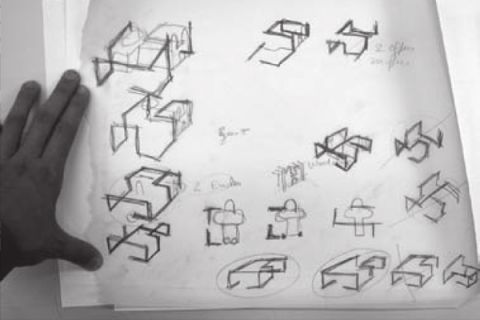
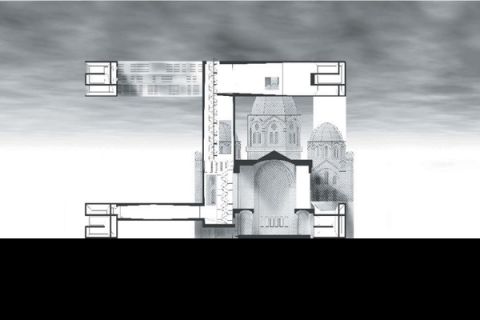
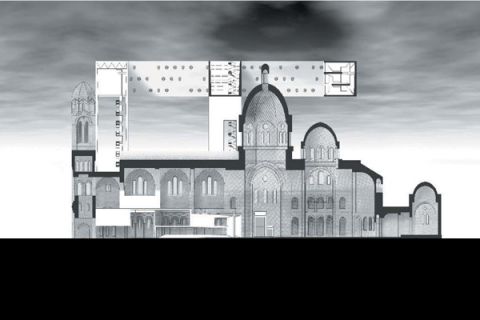
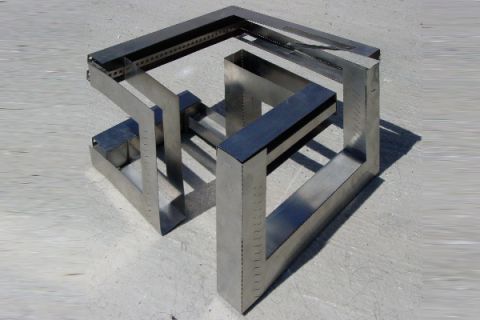
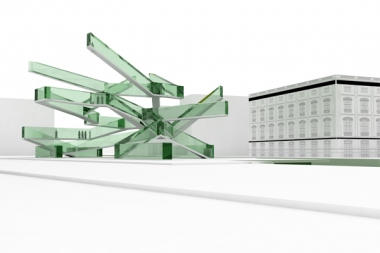
EuroMarseille transposes this planar strategy into three dimensions. Tubes extend out of the existing cathedral and wrap around the building and into the adjacent space. Dramatic cantilevers frame an identical external volume by delimiting its edges. Formally and structurally distinct form cathedral the extension nevertheless forces a new conception of sacral buildings itself, a structural tour de force bracketing the sacral space and while dismantling the dominating monumental character of the church.

spatial loops around the church
section through the church building
I believe in cantilevers
church / non church - laser cut steel model
related: 

Freiheits- und Einheitsdenkmal / Berlin - competition entry for a monument to the German re-unification, Berlin Germany, 2009 / Aurel von Richthofen

Rotterdam Transportation Museum - study project, Rotterdam, The Netherlands, 2002 -2003 / Aurel von Richthofen, Sander Troost

The 'tensairity' pedestrian bridge in Maribor, Slovenia 2010 is a light-weight tensegrity and air-balloon bridge in preparation of the cities 2012 program as the European Capital of Culture. Competition entry by Aurel von Richthofen in collaboration with 'tensairity' consultant Prof. Dr. Rolf Luchsinger.