New Bouwkunde
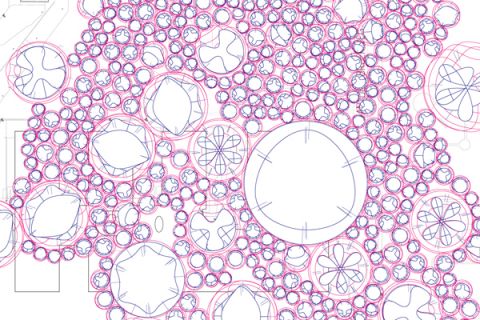
The school is in fact a campus within a campus, a system of complex programmatic requirements and nested spatial hierarchies. The previous school avoided the dilemma of size vs education by creating a machine for learning, absorbing students and teachers alike, dwarfing the individuals against its multistory labyrinth and forcing them into pre-described patterns of thinking. Ironically the original concrete building collapsed after a short circuit in a coffee maker set fire in 2007.
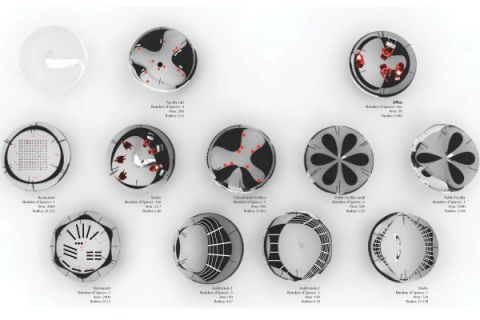
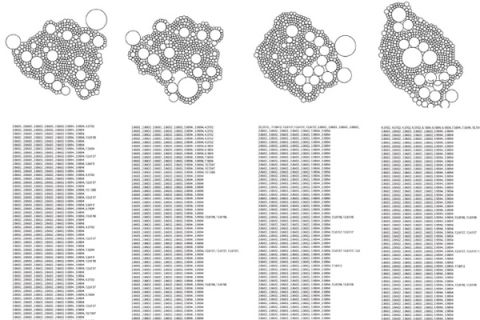
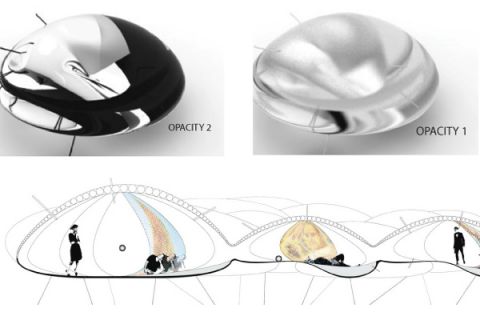
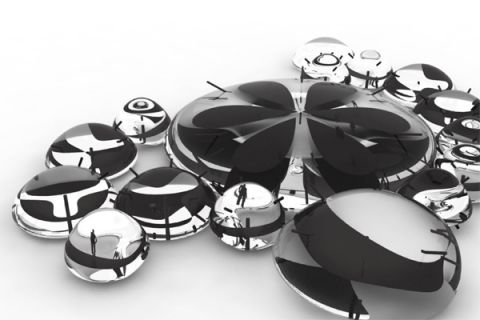
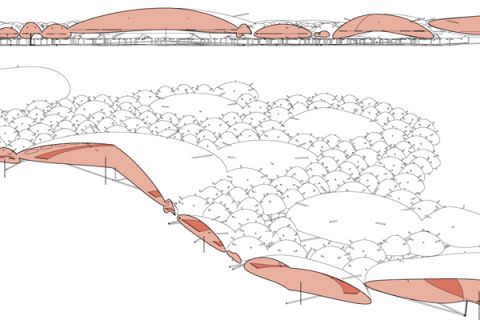
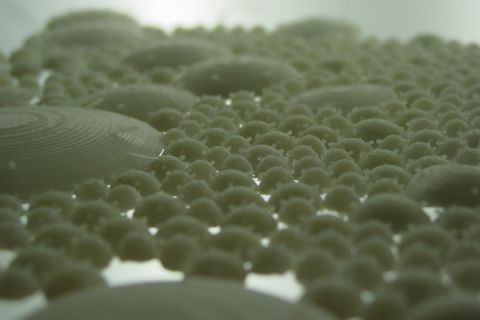
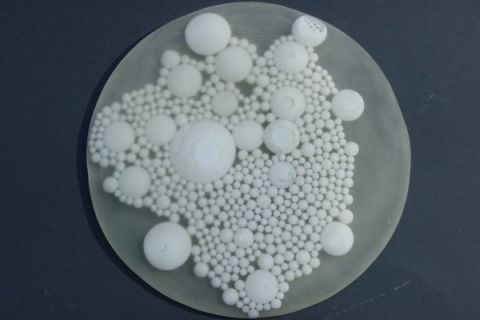
Resisting the idea of a single machine, New Bouwkunde is a cluster of cellular bubbles. Cells come in different types responding to programmatic requirements. The cells re-combine according to temporal and local specificities of the university environment. Studio cells, office cells, auditoriums and labs form micro clusters. Larger programmatic cells, such as libraries and restaurants attract those clusters again. Each cell constantly negotiates its position within the cluster and within the overall field. A shift in programmatic use will result in a new constellation. Each cell is equipped with a semi-translucent membrane. This membrane contains and protects the learning environment. The membrane acts as projection screen from the inside and communication device from the outside. The visual information of each cell reinforces the system. Thus the design achieves local specificity within a large cluster, bridging size and locale.
Authors: Aurel von Richthofen
with Kaveh Arbab, Rushabh Parekh, Mohammed Nazmy
Place: Delft, The Netherlands
Year: 2008
Size: 20000 m2
Type: Competition
Client: TU Delft